
THE BECOMING OF ARTIST KING
An Evolving Visual Biography by Everflow
Is he destined—or is it only a far-fetched fairy tale?
The ending has not been painted.
This is not a retrospective assembled after success has made the story safe. It is a life being translated into paint while the outcome is still unknown.
The Becoming of Artist King is Everflow's evolving visual biography: a living body of paintings drawn from the identities he formed, the wounds he carried, the worlds he entered, and the selves he became in order to survive.
These figures are not fictional characters. Each archetype carries a role, contradiction, coping mechanism, wound, or gift from Everflow's lived experience. Together, they reveal the many people he had to become before he could finally learn how to remain himself.
His story is deeply personal, but its structure is ancient and collective. It is the hero's journey of the wounded child, the masks built for survival, the exile, the trials, the descent, the return, and the difficult act of reclaiming one's own name.
The story is still being painted.
CHAPTER I — THE CHAMELEON
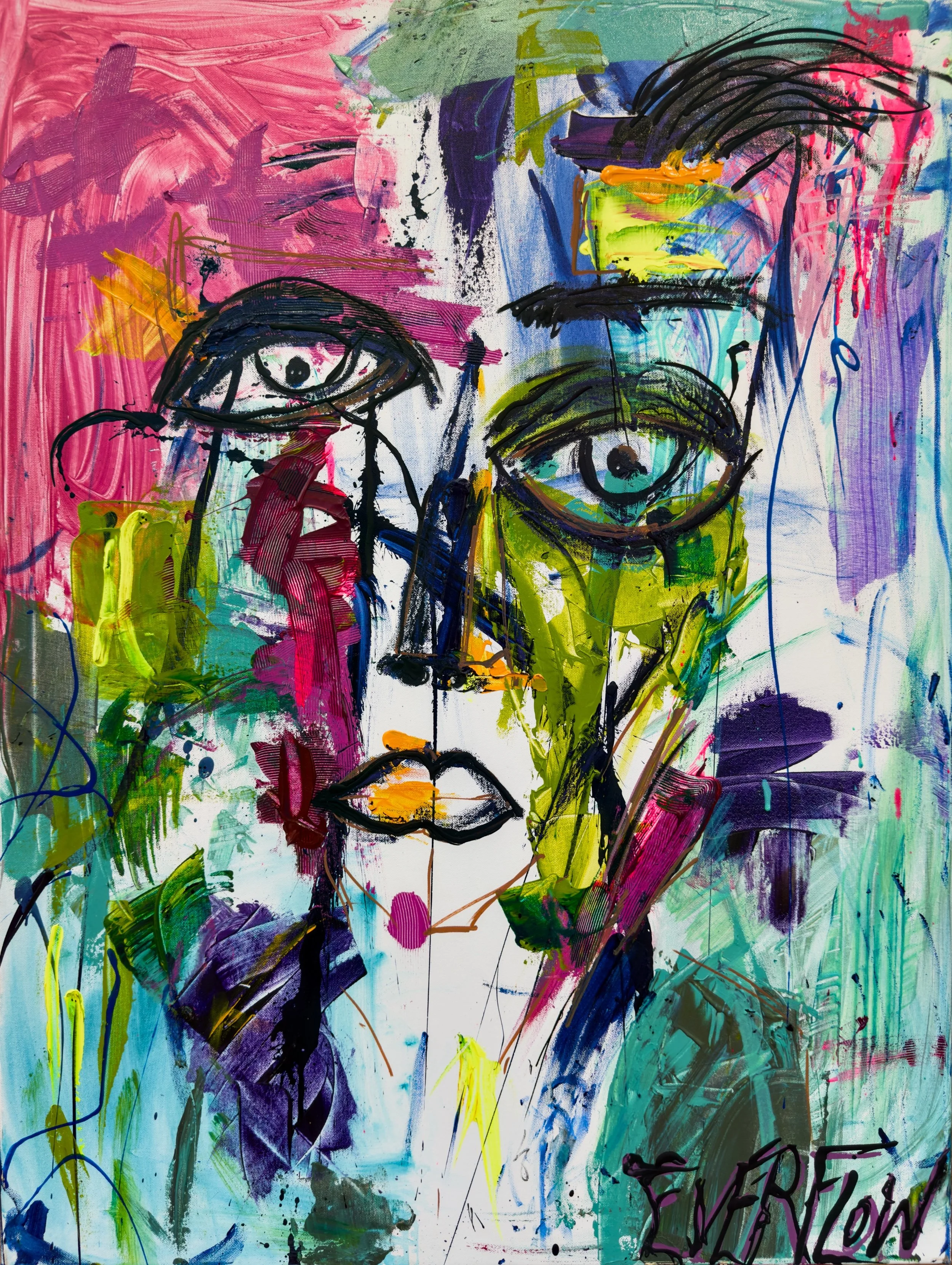
The Chameleon learned to survive by reading every room and becoming fluent in worlds that were not his own. What began as sensitivity became adaptation. What looked like social intelligence slowly became disappearance.
In Los Angeles, Everflow walked through cultures, ambitions, desires, judgments, and contradictions. He became the people he once misunderstood and did many of the things he once believed he never would. The gift was compassion: he learned to see the shared humanity inside lives that appeared entirely different from his own. The cost was that, after becoming so many people, he could no longer clearly feel where they ended and he began.
The Chameleon is the gateway to the biography—the man who learned to become everyone before the artist could finally choose who to become.
CHAPTER II — THE BEAUTIFUL LOSER
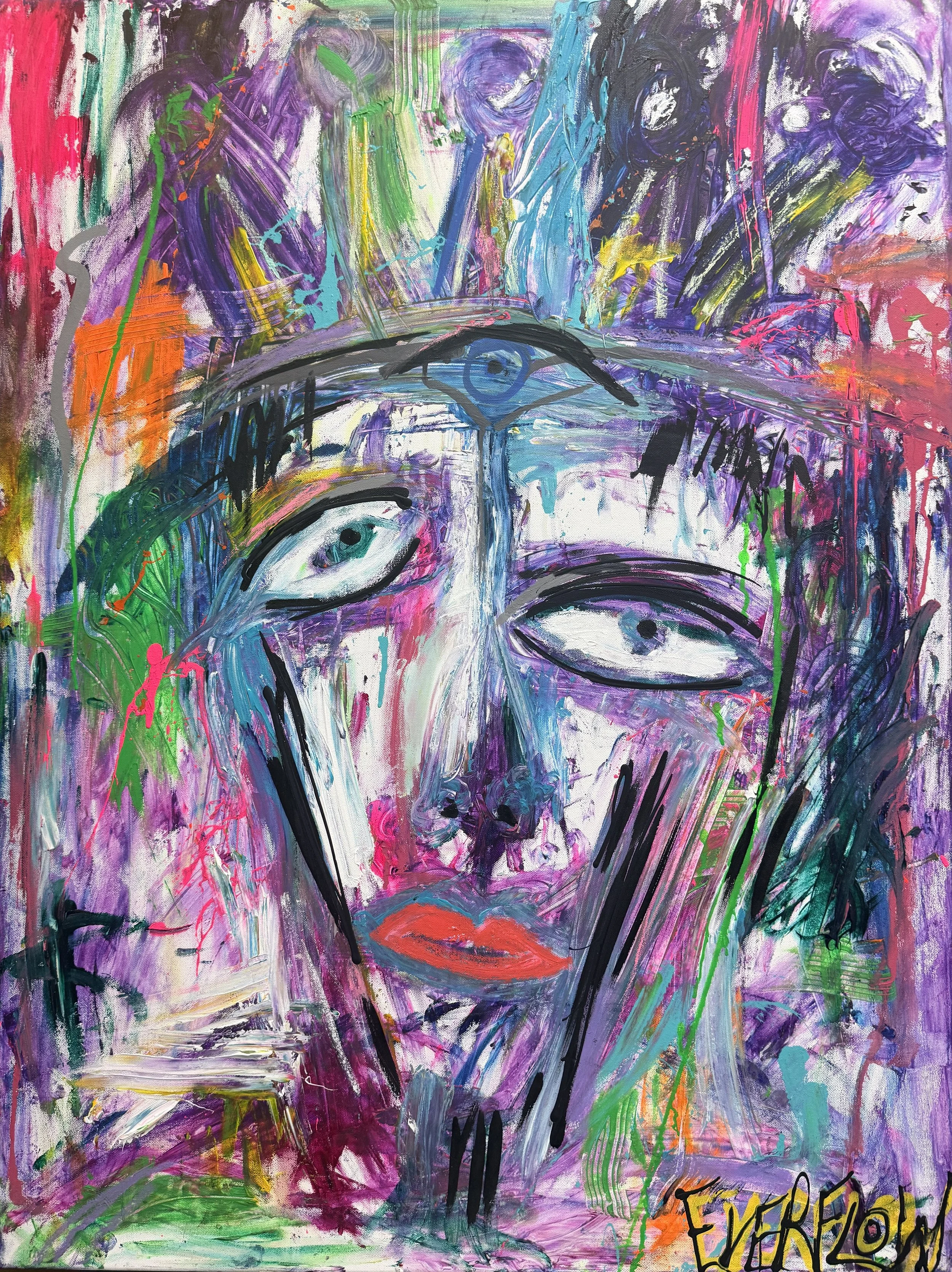
The Beautiful Loser carried extraordinary dreams into the fire of Los Angeles. He believed his voice, music, charisma, and imagination could reach the world. But dreams became deadlines, potential became pressure, and survival demanded choices that left him carrying both secret weight and private shame.
The title does not declare him a failure. It exposes the mythology of failure. The world could measure consequences, but it could not measure what it took to survive them. What appeared to be defeat was an unfinished transformation.
Beneath every coping mechanism remained the same gifted inner child, waiting to be told that his life was not over and that his purpose had not expired.
CHAPTER III — THE CROWN OF SORROW
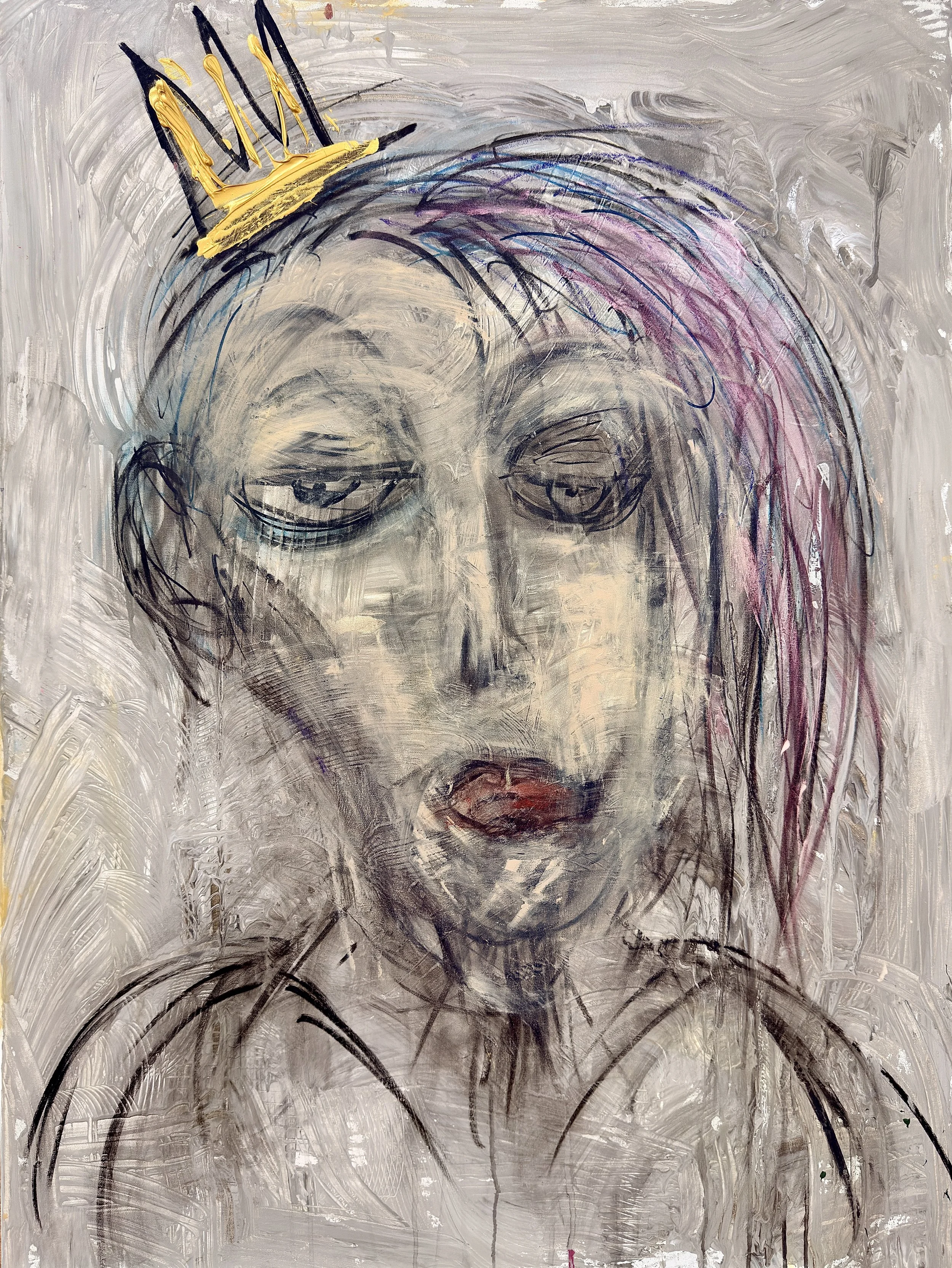
The Crown of Sorrow is the man who believed he had finally built the life that would make him whole, only to discover that somewhere inside it, his inner child had been forsaken.
He became the family man. He built a home, carried responsibility, protected the people he loved, and made himself smaller whenever his full presence seemed too loud for the room. The child who wanted to sing, paint, play, create, and be seen was repeatedly asked to sit down, quiet himself, and take up less space.
The painting does not accuse one person or assign one villain. It recognizes how relationships, family systems, social expectations, rejection, and self-abandonment can slowly teach a gifted person to disappear. Others may contribute to the shrinking, but the most painful recognition is realizing when one has begun participating in one's own disappearance.
The Beautiful Loser carried the dream.
The Crown of Sorrow carried the cost.
Artist King would transform them both.
CHAPTER IV — ARTIST KING
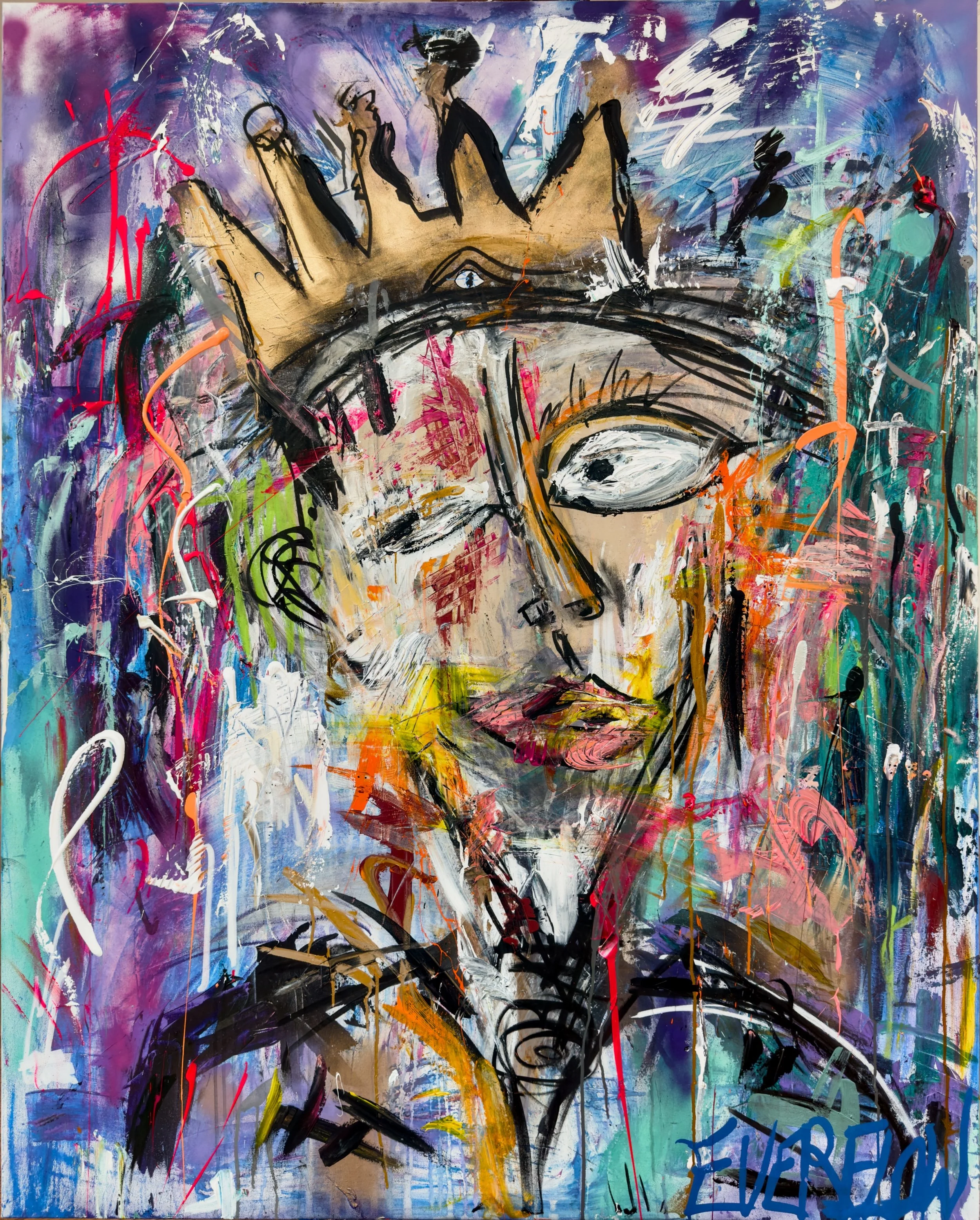
Artist King is the portrait of the artist Everflow is becoming—the man who no longer needs to disappear into every world he enters.
His fractured face carries every identity, consequence, influence, and broken dream, but the crown is not inherited. It is claimed. The distortion is not damage being concealed. It is experience being integrated.
Artist King does not erase The Chameleon, The Beautiful Loser, The Crown of Sorrow, or any of the selves who came before him. He gathers them, forgives them, and transforms their survival into creative authority.
The crown does not signify power over others. It represents dominion over his inner world—the moment the artist stops abandoning himself and begins creating from the throne of his authentic power.
CHAPTERS STILL BENEATH THE SURFACE
The biography is not complete.
Some memories were buried because, at the time, forgetting was a form of survival. As recollections return and become safe enough to hold, Everflow will revisit them through paint—not to glorify the past or punish himself, but to understand, forgive, and integrate the selves he once abandoned.
Future chapters may return to the bullied child who was called a turtle; the boy who began running every morning beside his father and learned that disciplined effort could transform him; Runner King; Vocal King; the many forms of the Hustler; Player King; and other identities that have not yet revealed their final names.
The fact that Everflow survived to tell this story is part of the work. He did not disappear into addiction, prison, violence, rejection, or the broken dreams that surrounded his path. What he once interpreted as failure is revealing itself as the unfinished middle of a much larger journey.
The paintings will arrive as the memories are ready.
WHY THIS STORY MATTERS
Everflow's biography belongs to one life, but the archetypes belong to many.
Most people have worn a mask to survive a room. Many have abandoned a dream to preserve a relationship, carried shame for choices made under pressure, mistaken sensitivity for brokenness, or become so responsible for everyone else that the child within them nearly disappeared.
The work offers another possibility: that nothing survived in vain. The wound can become language. Shame can become understanding. Memory can become color. A life that appeared fractured can become a map through which another person recognizes their own way home.
“I suffered so I could tell the story—so you would not have to live it.”
— Everflow
THE PATRON'S ROLE
Every significant body of work survives because someone recognizes its value before the story is finished.
At this moment, the next six months of The Becoming of Artist King are not yet financially secured. Everflow is seeking founding patrons, collectors, and cultural allies who understand that uninterrupted creative time is not an indulgence—it is the ground from which the work can emerge.
Patron support protects the conditions required to continue painting: studio and gallery time, materials, documentation, archiving, exhibition development, and the human life surrounding the work. It allows a neurodivergent artist to remain inside the purpose that gives his life coherence instead of being pulled back into work that drains the very instrument through which the art arrives.
Support can take several forms:
- Collect an available chapter from the series.
- Become a founding patron of the evolving biography.
- Sponsor studio time, materials, documentation, or an exhibition.
- Arrange a private viewing or patron conversation.
- Introduce the work to a collector, curator, designer, or institution.
- Share the story with someone who may recognize its importance.
This is not an invitation to observe from a safe distance after the ending is known. It is an invitation to enter while the outcome is still being created.
Can this become the life Everflow once believed was possible—or is it only a far-fetched fairy tale?
The answer will not be written by belief alone. It will be written through courage, work, time, and the people willing to protect the conditions in which the work can continue.
Those who enter the story now will be able to say they witnessed the becoming.
SCHEDULE A PRIVATE CONVERSATION
Artwork by Everflow
Archetypes Series | The Becoming of Artist King
24 × 36 inches
Mixed Media on Canvas
2026
The Beautiful Loser is the portrait of a dreamer who once believed he could accomplish anything he placed his mind upon.
He arrived in Los Angeles carrying music, charisma, imagination, and the conviction that his voice could reach the world. He performed, wrote, produced, and pursued the platinum song—the one creation that might finally make the world recognize everything living inside him. People were attracted to his light. His life was filled with color, excitement, movement, parties, possibility, and the intoxicating electricity of becoming.
But Los Angeles can make a person feel ancient while he is still young. By twenty-four, he had already been taught to fear that he was running out of time. Dreams became deadlines. Potential became pressure. When survival demanded that he become a hustler, one moment changed the direction of his life. The performer began carrying a secret weight. Shame entered where possibility had once lived, and the young man who believed in everything slowly began doubting himself.
His conflicting eyes inhabit two different realities. One still searches for the future he imagined. The other watches for judgment, danger, and disappointment. The colors around him remain electric, but his face reveals the cost of trying to appear alive while privately mourning broken dreams.
The Beautiful Loser began reaching for anything that could keep the dream breathing—music, money, nightlife, ambition, escape, and other forms of temporary relief. Yet beneath every coping mechanism remained the same gifted inner child, still waiting to be told that his life was not over and that his purpose had not expired.
The title does not declare him a failure. It exposes the mythology of failure. He was called a loser by a world that could measure consequences but could not measure what it took to survive them. What appeared to be defeat was an unfinished transformation.
The Beautiful Loser is the first chapter in the becoming of Artist King. His light would eventually dim beneath shame, responsibility, and self-abandonment, giving rise to The Crown of Sorrow. But even here, before he understood his own worth, the Artist King was already living inside him.