
 Image 1 of 1
Artwork by Everflow
Archetypes Series | The Becoming of Artist King
24 × 36 inches
Mixed Media on Canvas
2026
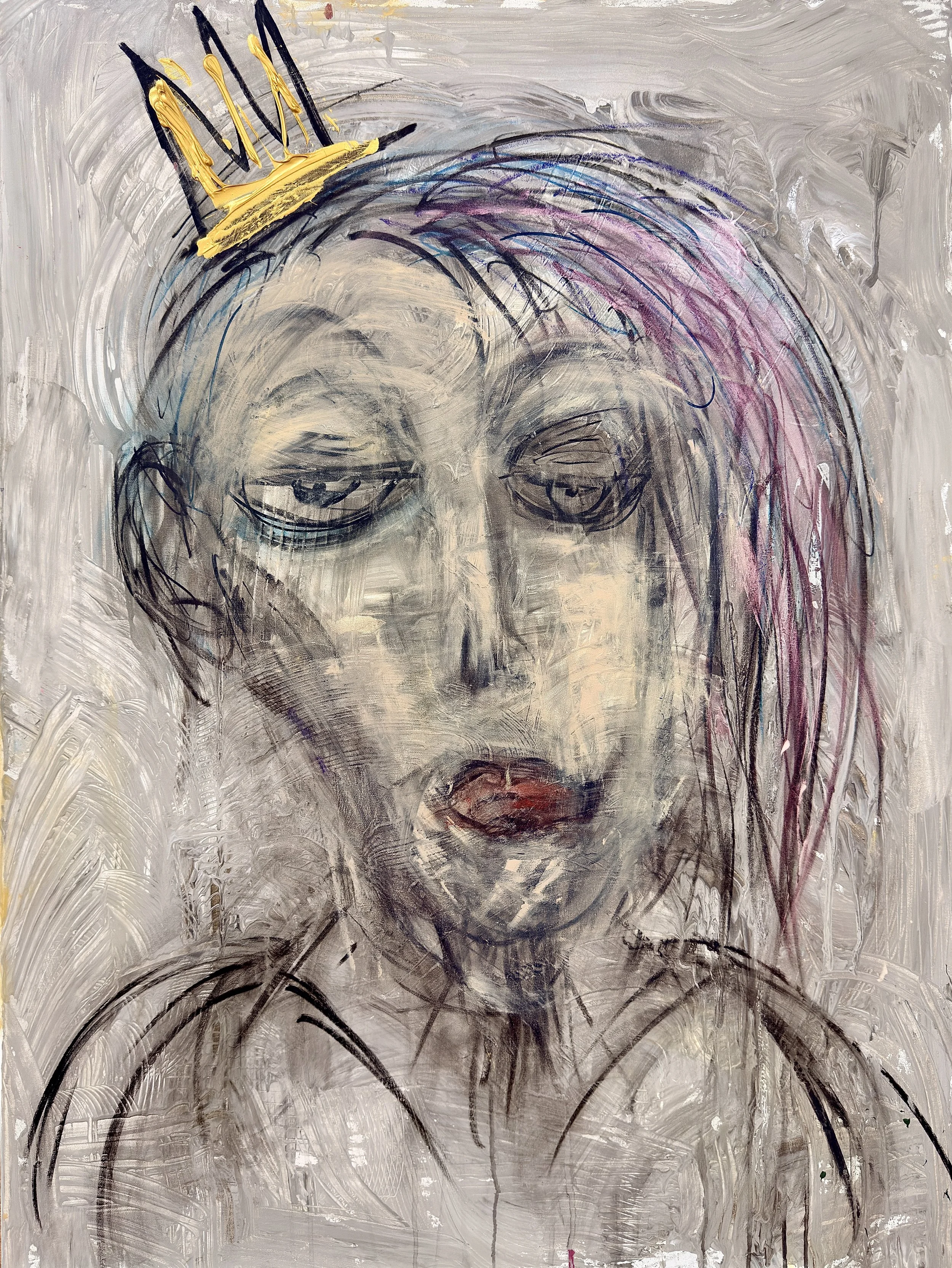
The Crown of Sorrow is the portrait of a man who believed he had finally built the life that would make him whole, only to discover that somewhere inside it, his inner child had been forsaken.
After the fractured dreams and restless survival of The Beautiful Loser, he reached for a different definition of success. He became the family man. He built a home, carried responsibility, protected the people he loved, and made himself smaller whenever his full presence seemed too loud for the room. He believed sacrifice was love and that fulfillment might eventually arrive if he could become enough for everyone else.
But the inner child who wanted to sing, paint, play, create, and be seen was repeatedly asked to sit down. Be quiet. Do not take up so much space. Do not be too expressive. Do not be too different. Eventually, the message became even more painful: do not be seen, and do not be heard.
The crown represents the life he believed he had earned. Yet beneath it is an exhausted inner child carrying an adult kingdom. His heavy eyes hold years of interrupted purpose, buried creativity, financial pressure, neurodivergence misunderstood as brokenness, and the silent labor of trying to preserve belonging. He has earned every shadow beneath them.
He reached what should have felt like arrival, but remained unseen and unfulfilled. Even surrounded by family, he carried the private belief that he was not intelligent enough, disciplined enough, conventional enough, or worthy enough. His sovereignty remained visible, but he could no longer feel it.
When Everflow first completed the painting, he wanted to cover it. Its sorrow felt too exposed, too dark, and too far removed from what others might consider beautiful. But painting over the figure would have repeated the original wound. It would have placed another mask over the exhausted child instead of finally allowing him to exist.
The Crown of Sorrow does not accuse one person or assign one villain. It acknowledges how relationships, family systems, social expectations, rejection, and self-abandonment can slowly teach a gifted person to disappear. Others may have contributed to his shrinking, but the most painful recognition was that he eventually participated in his own disappearance.
This painting is the second chapter in the becoming of Artist King. The crown has not vanished; it has become almost unbearable. Yet the sorrow is not the conclusion. By witnessing the inner child instead of erasing him, Everflow begins returning the crown to its true purpose—not as a burden imposed from outside, but as the embodiment of the sovereignty that survived within.
The Beautiful Loser carried the dream.
The Crown of Sorrow carried the cost.
Artist King would transform them both.
Artwork by Everflow
Archetypes Series | The Becoming of Artist King
24 × 36 inches
Mixed Media on Canvas
2026
The Crown of Sorrow is the portrait of a man who believed he had finally built the life that would make him whole, only to discover that somewhere inside it, his inner child had been forsaken.
After the fractured dreams and restless survival of The Beautiful Loser, he reached for a different definition of success. He became the family man. He built a home, carried responsibility, protected the people he loved, and made himself smaller whenever his full presence seemed too loud for the room. He believed sacrifice was love and that fulfillment might eventually arrive if he could become enough for everyone else.
But the inner child who wanted to sing, paint, play, create, and be seen was repeatedly asked to sit down. Be quiet. Do not take up so much space. Do not be too expressive. Do not be too different. Eventually, the message became even more painful: do not be seen, and do not be heard.
The crown represents the life he believed he had earned. Yet beneath it is an exhausted inner child carrying an adult kingdom. His heavy eyes hold years of interrupted purpose, buried creativity, financial pressure, neurodivergence misunderstood as brokenness, and the silent labor of trying to preserve belonging. He has earned every shadow beneath them.
He reached what should have felt like arrival, but remained unseen and unfulfilled. Even surrounded by family, he carried the private belief that he was not intelligent enough, disciplined enough, conventional enough, or worthy enough. His sovereignty remained visible, but he could no longer feel it.
When Everflow first completed the painting, he wanted to cover it. Its sorrow felt too exposed, too dark, and too far removed from what others might consider beautiful. But painting over the figure would have repeated the original wound. It would have placed another mask over the exhausted child instead of finally allowing him to exist.
The Crown of Sorrow does not accuse one person or assign one villain. It acknowledges how relationships, family systems, social expectations, rejection, and self-abandonment can slowly teach a gifted person to disappear. Others may have contributed to his shrinking, but the most painful recognition was that he eventually participated in his own disappearance.
This painting is the second chapter in the becoming of Artist King. The crown has not vanished; it has become almost unbearable. Yet the sorrow is not the conclusion. By witnessing the inner child instead of erasing him, Everflow begins returning the crown to its true purpose—not as a burden imposed from outside, but as the embodiment of the sovereignty that survived within.
The Beautiful Loser carried the dream.
The Crown of Sorrow carried the cost.
Artist King would transform them both.