
 Image 1 of 1
2026
Mixed medium
48x36in
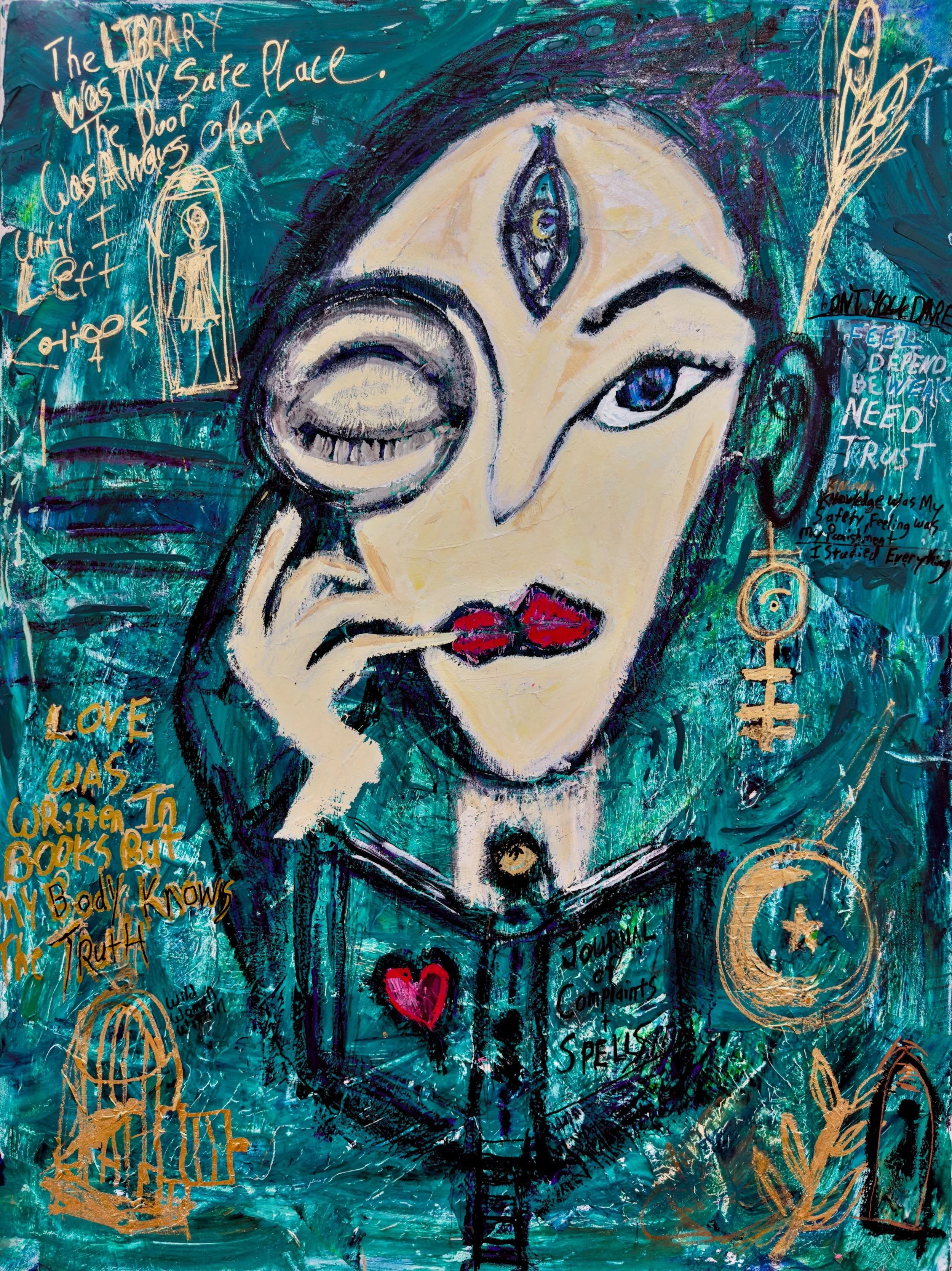
The third work in the Everflow Archetype Collection—and the first feminine archetype—The Dismissive Librarian explores the tension between extraordinary intellect, fierce independence, and the vulnerability required for intimacy.
The Dismissive Librarian is a woman of extraordinary intelligence.
She has read the books. Earned the degrees. Studied the patterns. Learned how people work. Her mind became her sanctuary, and knowledge became one of her greatest powers.
But long before she learned to understand the world, she learned how to survive it.
She was asked to become an adult too early—to carry responsibilities beyond her years and care for others when she was still learning how to care for herself. Somewhere along the way, she absorbed a quiet lesson:
Feelings make you vulnerable.
Need makes you weak.
Depend on yourself.
So she did.
She became capable. Independent. Accomplished. Difficult to shake. She built an extraordinary library within herself and filled it with knowledge, achievement, observation, and control.
Then love entered the room.
At first, the door was open.
Connection felt effortless. Intimacy felt exciting. She could be warm, magnetic, affectionate—even deeply loving. But as the relationship became real, another part of her awakened: the part that remembered vulnerability as danger.
The closer someone came, the more exposed she felt.
So the Librarian returned to the place she had always trusted most:
her mind.
She analyzed what she once felt. She found flaws where she once saw beauty. Distance began to feel safer than closeness. The person she loved could suddenly experience her as unreachable, while she experienced herself as simply trying to breathe.
This is the contradiction of The Dismissive Librarian.
Her independence is both a gift and a defense.
Her intellect can illuminate truth—or protect her from feeling it.
The walls that once kept her safe can eventually keep love from reaching her.
Yet this archetype is not a sentence.
The door painted into her world is still there.
Healing begins when she discovers that vulnerability is not the opposite of strength. That receiving care does not erase independence. That emotions do not need to be solved before they can be felt. And that intimacy does not require surrendering the self.
For someone who learned early that love meant carrying everything alone, perhaps the deepest act of courage is allowing another person to help carry it.
The Librarian already possesses knowledge.
Her next lesson cannot be found in a book.
It is learning to remain present when the heart opens.
Because true intimacy begins when two people can finally say:
I can be fully seen—and I do not have to leave.
2026
Mixed medium
48x36in
The third work in the Everflow Archetype Collection—and the first feminine archetype—The Dismissive Librarian explores the tension between extraordinary intellect, fierce independence, and the vulnerability required for intimacy.
The Dismissive Librarian is a woman of extraordinary intelligence.
She has read the books. Earned the degrees. Studied the patterns. Learned how people work. Her mind became her sanctuary, and knowledge became one of her greatest powers.
But long before she learned to understand the world, she learned how to survive it.
She was asked to become an adult too early—to carry responsibilities beyond her years and care for others when she was still learning how to care for herself. Somewhere along the way, she absorbed a quiet lesson:
Feelings make you vulnerable.
Need makes you weak.
Depend on yourself.
So she did.
She became capable. Independent. Accomplished. Difficult to shake. She built an extraordinary library within herself and filled it with knowledge, achievement, observation, and control.
Then love entered the room.
At first, the door was open.
Connection felt effortless. Intimacy felt exciting. She could be warm, magnetic, affectionate—even deeply loving. But as the relationship became real, another part of her awakened: the part that remembered vulnerability as danger.
The closer someone came, the more exposed she felt.
So the Librarian returned to the place she had always trusted most:
her mind.
She analyzed what she once felt. She found flaws where she once saw beauty. Distance began to feel safer than closeness. The person she loved could suddenly experience her as unreachable, while she experienced herself as simply trying to breathe.
This is the contradiction of The Dismissive Librarian.
Her independence is both a gift and a defense.
Her intellect can illuminate truth—or protect her from feeling it.
The walls that once kept her safe can eventually keep love from reaching her.
Yet this archetype is not a sentence.
The door painted into her world is still there.
Healing begins when she discovers that vulnerability is not the opposite of strength. That receiving care does not erase independence. That emotions do not need to be solved before they can be felt. And that intimacy does not require surrendering the self.
For someone who learned early that love meant carrying everything alone, perhaps the deepest act of courage is allowing another person to help carry it.
The Librarian already possesses knowledge.
Her next lesson cannot be found in a book.
It is learning to remain present when the heart opens.
Because true intimacy begins when two people can finally say:
I can be fully seen—and I do not have to leave.