
 Image 1 of 1
Everflow · 2025
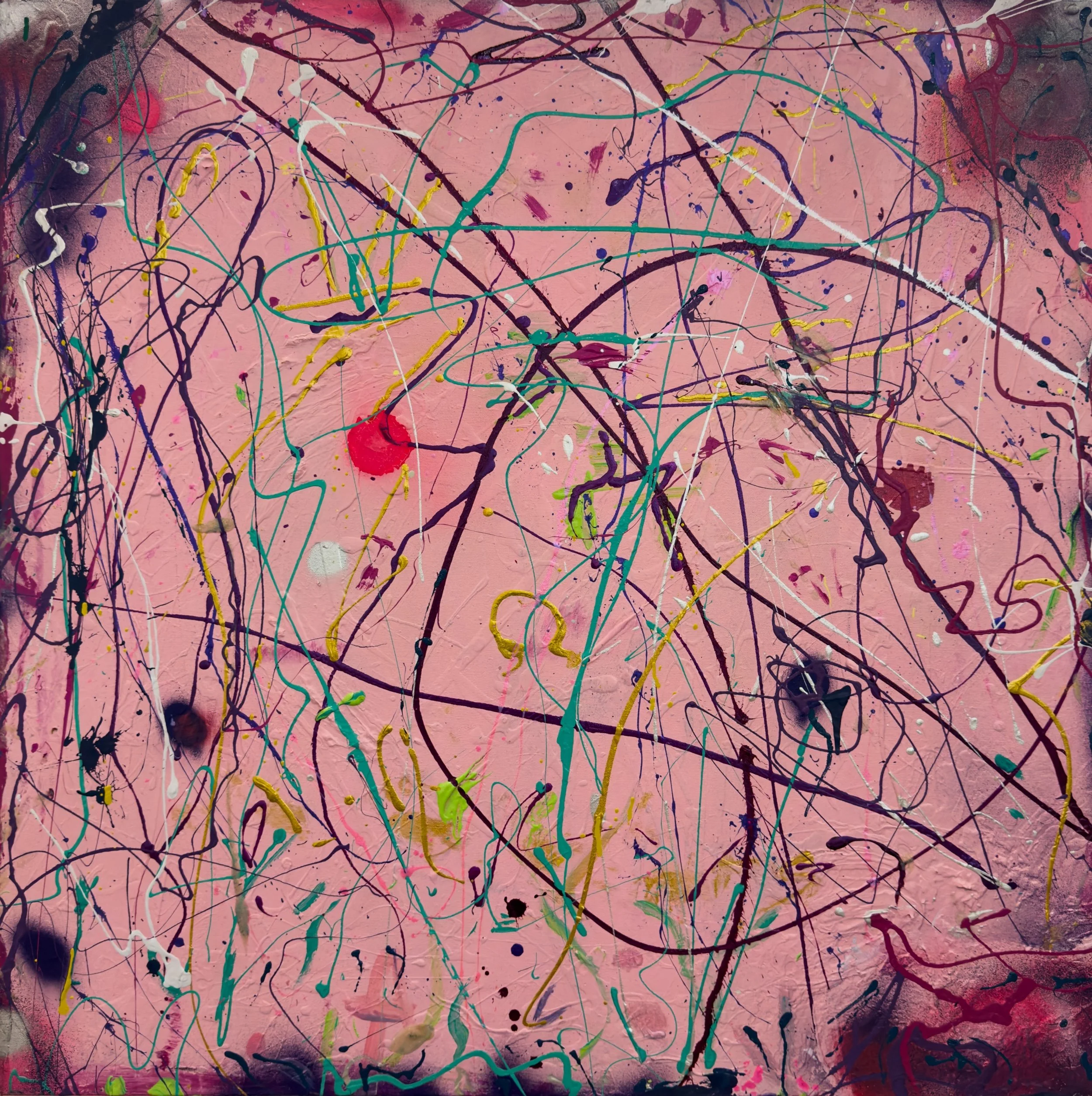
Mixed media on canvas · 36 × 36 in.
Liquid Sound Design
Rebirth marks Everflow’s intentional return to the center of his artistic practice after nearly a decade away from it. Created during the first year of a profound personal separation, the painting became both an act of release and a recommitment to purpose.
Beneath its surface lies an earlier painting representing the trauma bond—the emotional cords, learned patterns, and attachments that had connected the artist to a life he could no longer inhabit. Everflow did not erase that history. He painted through it, allowing what had once confined him to become the foundation for something new.
The work became a foundational piece in the third generation of Liquid Sound Design and Everflow’s first fully intentional return to the process in nearly ten years. Without using a brush to direct the composition, he allowed the paint to fall, travel, collide, and discover its own pathways across the canvas. Control gave way to instinct. Each line became an energetic release—some resembling cords being stretched or severed, while others carried the first movements of a new life.
During this period, Everflow recognized that he had gradually moved away from the purpose at the center of his being. An idea encountered in The Way of the Superior Man helped bring that realization into focus: when a person abandons their deepest purpose, the rest of life can begin to lose its axis. Returning to the canvas was therefore more than a return to painting. It was a return to himself.
Rebirth does not portray transformation as clean or painless. Its beauty lives within the entanglement. It speaks to the universal moment when an old identity begins to fall away and a person must consciously decide what will be released, what will be carried forward, and who they will become.
The past remains beneath the surface as history—but no longer as destiny.