

Wood Frame
This light wood frame adds a softness to your decor. The wood is responsibly sourced from a local family-run framing business with a reputation for durability.

UV Acrylic Frame
This acrylic frame adds a studio-like professional touch to your decor. The material is responsibly sourced from a local family-run framing business with a reputation for durability.

Full-Bleed Mounting
Print is framed flush to the edge without a mat.

Mat Mounting
Print is framed by a 2’’ white core mat with a bevel cut around the edge.
Float Mounting
Print is elevated to allow for a full view of face and edges.
All prints available for custom framing and mounting!
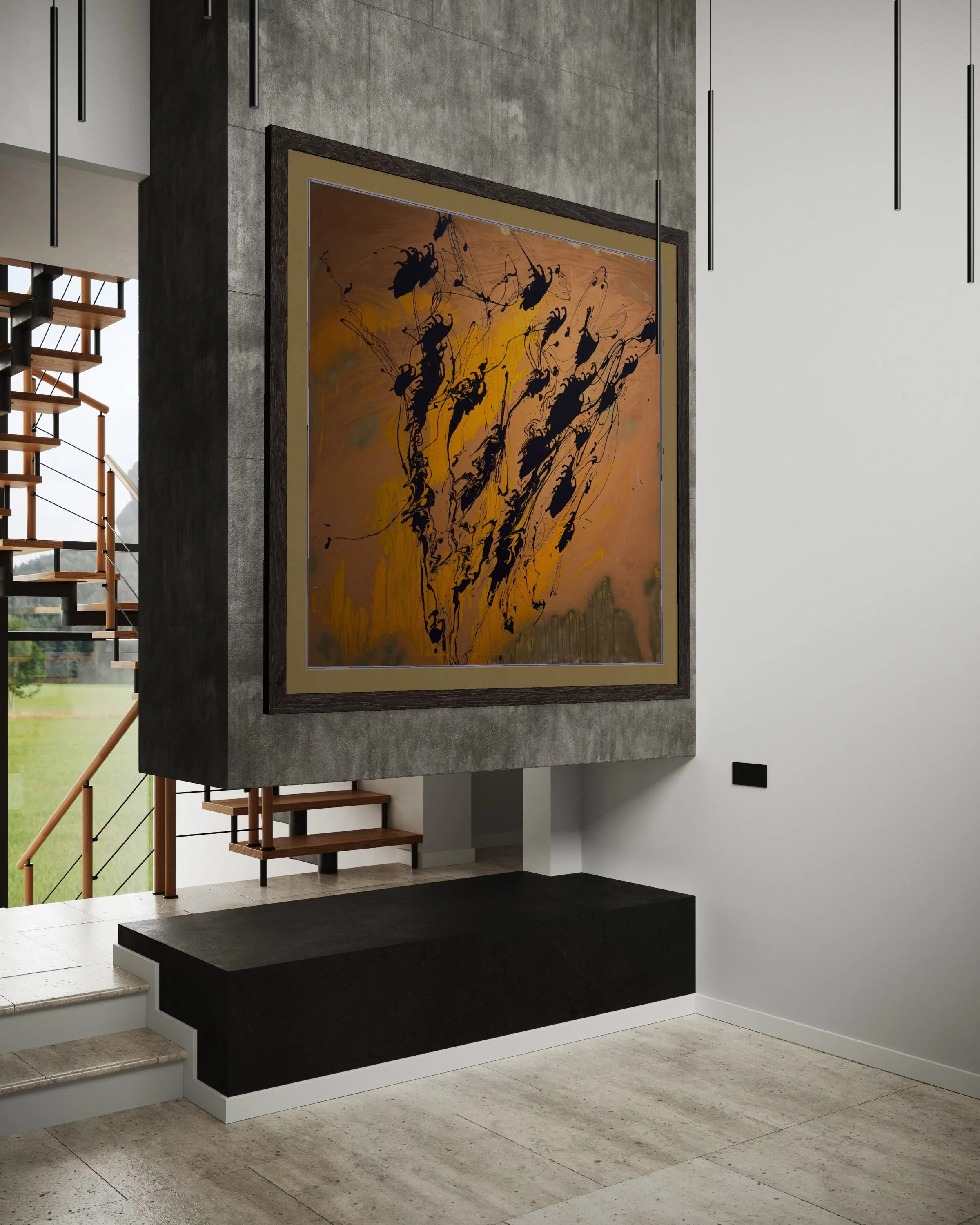
Title: Tribal Ascension
Artist: Blake Everflow
Year: 2012
Medium: Acrylic, Oil-Based Enamel, and Aerosol
Dimensions: 60 × 60 in
Status: Private Collection
Description:
Created in 2012, Tribal Ascension is a monumental visual rhythm—an early expression of the movement, symbolism, and layered energy that would come to define Everflow’s artistic language.
Across an atmospheric field of clay, smoke, skin, and soil, bold black forms rise like ancestral figures, ancient markings, or spirits carried upward through time. They feel simultaneously grounded and airborne—rooted in origin, yet reaching beyond the boundaries of the known.
The title does not refer to one specific tribe or mythology. Here, “tribal” speaks to something instinctive and collective: the inherited memory carried within the human body. Its ascending forms evoke struggle, survival, remembrance, and the sacred impulse to become more than circumstance has allowed.
Tribal Ascension is a visceral dance between the ancestral and the cosmic—a painting about reclaiming what has been buried and rising without abandoning where you came from.
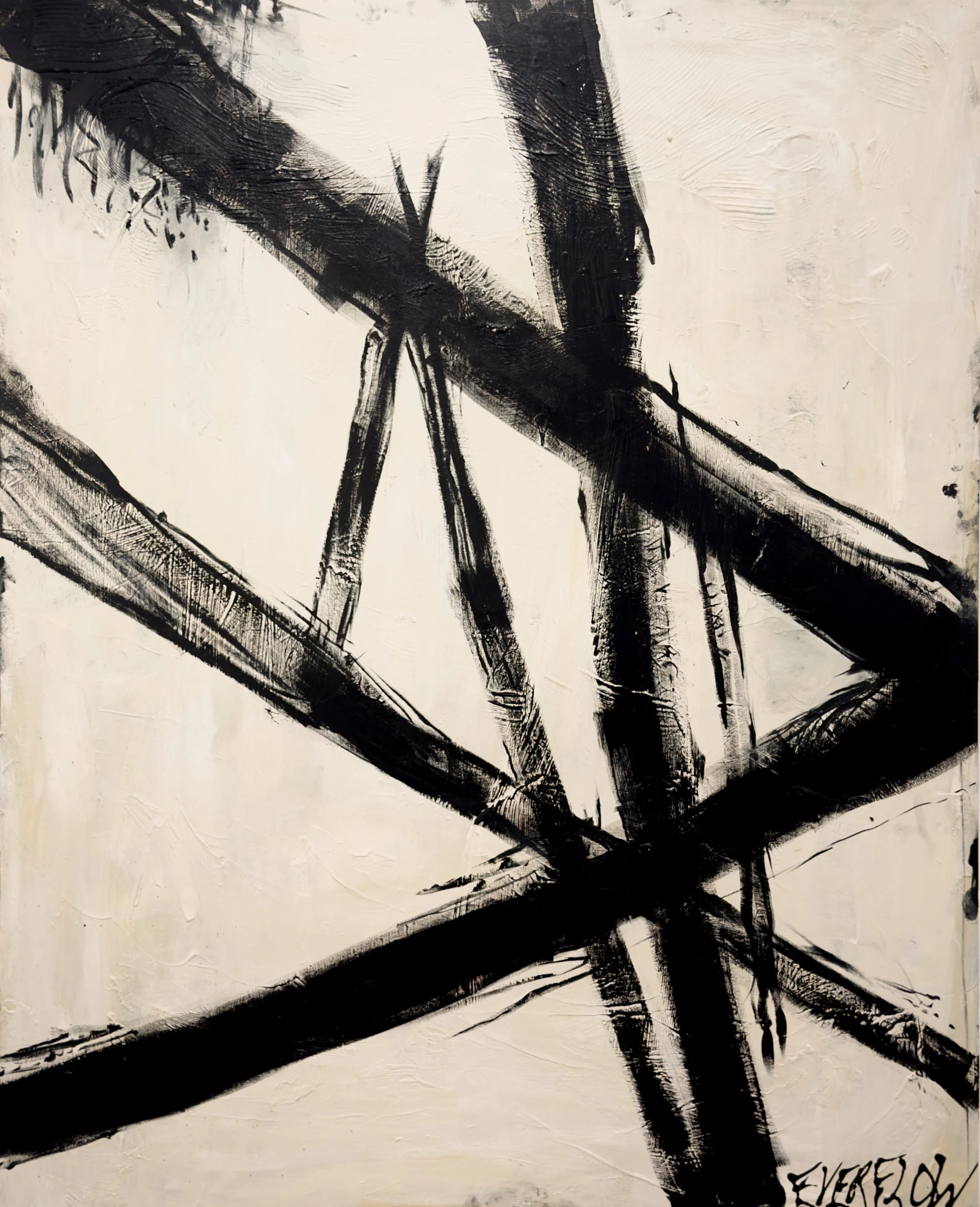
STRONG-WILLED
Architecture of Becoming
60 × 48 in.
Oil on canvas
Strong-Willed explores the moment when determination—the very quality that once carried us forward—begins to work against us.
The composition is restrained, but the marks are decisive. Heavy black strokes move across an open field like structural beams, pathways, and competing directions. Near the center, smaller forms appear to brace themselves against a larger structure, holding tightly enough to bend it under their resistance.
It is an image of willpower pushed to its limit.
There are times when being strong-willed is necessary. We hold our position. We refuse to collapse. We survive because something inside us says, No. I will not move.
But strength has a shadow.
Hold tightly enough to anything—a belief, a relationship, an identity, a direction—and eventually the force required to maintain it begins bending the structure that holds us.
What once made us strong can become the very thing threatening to break us.
Within the painting is also the suggestion of a crossroads. Lines intersect. Directions compete. There is no obvious instruction telling us which path to choose. The question becomes whether we continue forcing the direction we have already chosen simply because we chose it—or develop the deeper strength required to change course.
That is the paradox at the center of Strong-Willed:
Sometimes strength means holding on.
Sometimes strength means letting go.
Wisdom is knowing when the crossroads has arrived.
Within Architecture of Becoming, the painting represents a critical stage of transformation—the recognition that becoming does not always require greater force. Sometimes the architecture of the self must soften, release, and reorganize before it breaks.
The will does not disappear.
It learns how to bend.